NO Reserve! One owner, #374 of 440. Warranty, Authenticity Certificate.
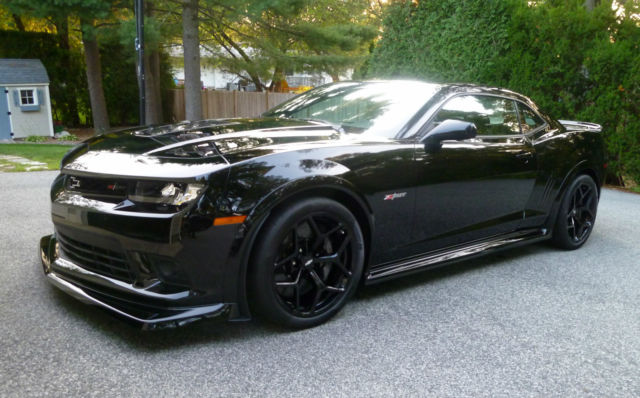
2014 Chevrolet Camaro

Chevrolet Camaro 2014 technical specifications | |
|---|---|
| Condition: | Used |
| Item location: | Warwick, Rhode Island, United States |
| Make: | Chevrolet |
| Model: | Camaro |
| Type: | Coupe |
| Trim: | Z/28 Coupe 2-Door |
| Year: | 2014 |
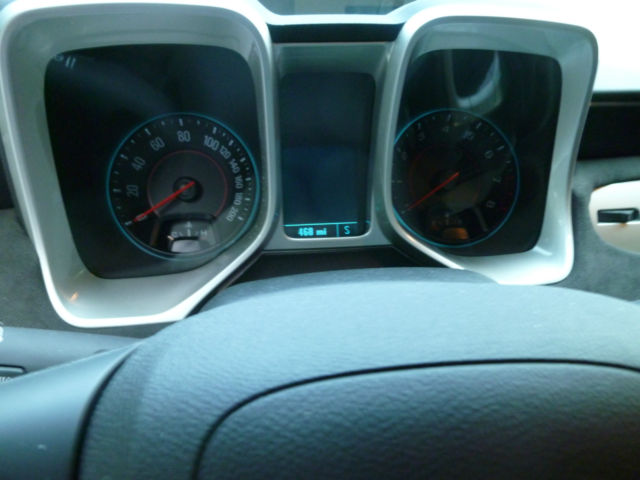
| Mileage: | 485 |
| VIN: | 2G1FS1EE5E9700374 |
| Color: | Black |
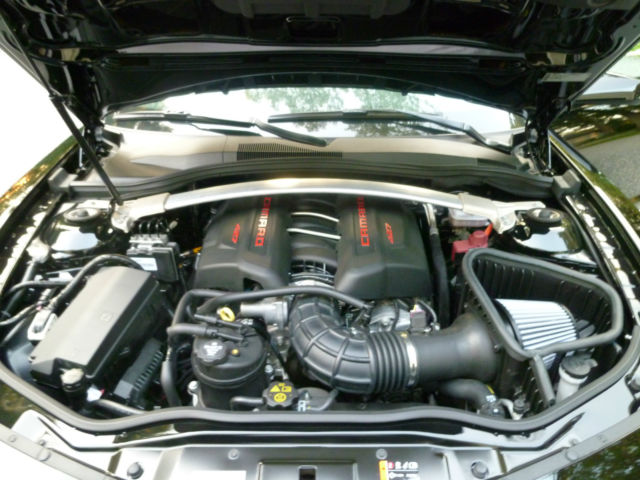
| Engine size: | 7.0L 7011CC 427Cu. In. V8 GAS OHV Naturally Aspirated |
| Number of cylinders: | 8 |
| Power options: | Air Conditioning, Cruise Control, Power Locks, Power Windows |
| Fuel: | Gasoline |
| Transmission: | Manual |
| Drive type: | RWD |
| Interior color: | Gray |
| Safety options: | Anti-Lock Brakes, Driver Airbag, Passenger Airbag, Side Airbags |
| Options: | Leather Seats, CD Player |
| Vehicle Title: | Clear |
| You are interested? | Contact the seller! |
Description |
|---|
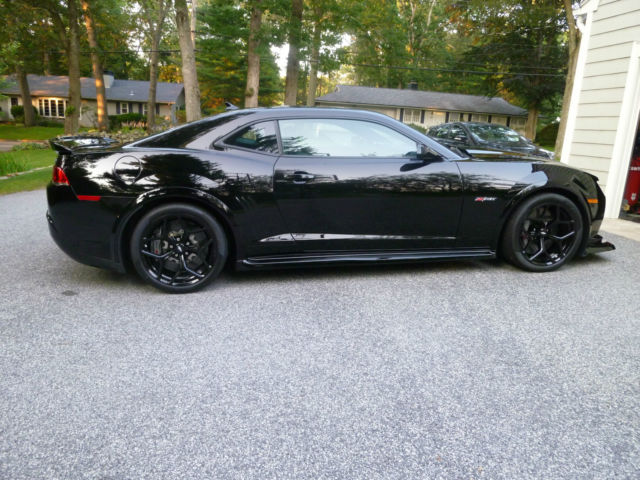
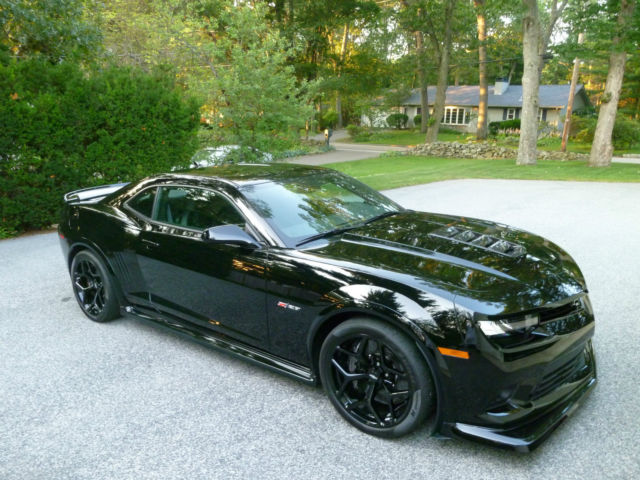
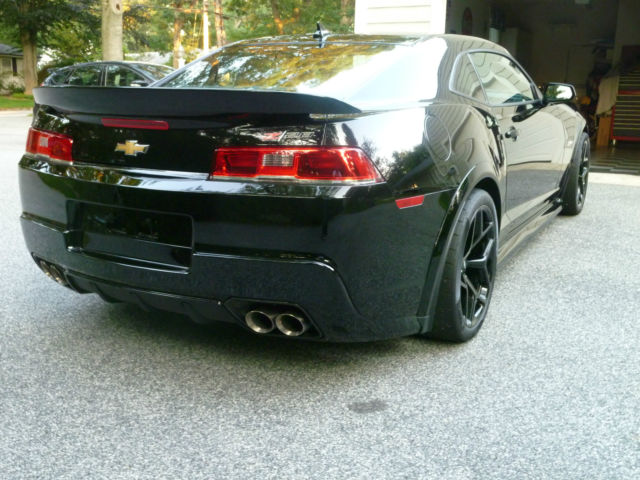
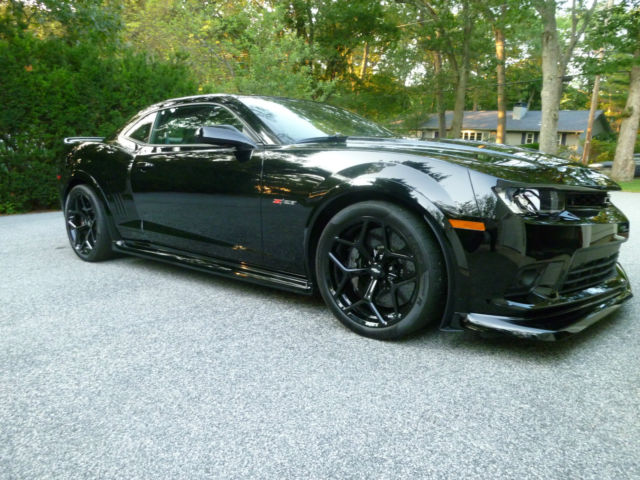
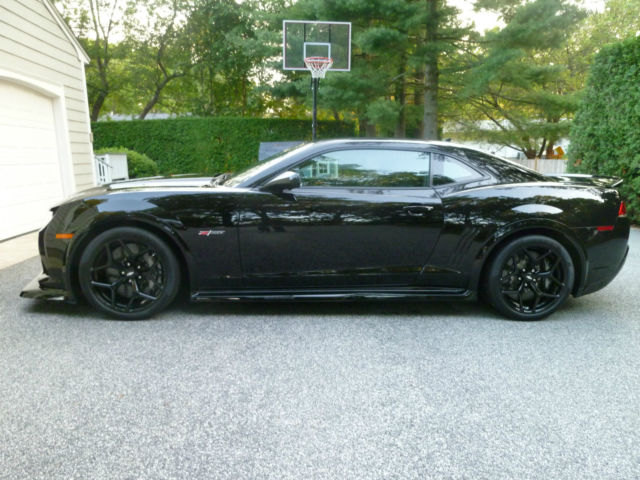
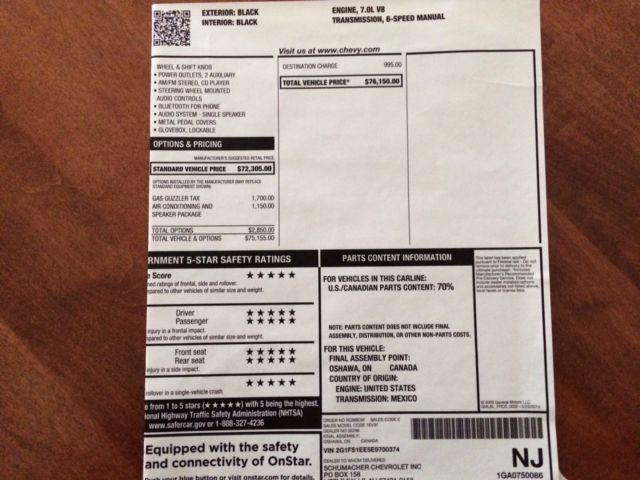
Black, 014 Z/28 Camaro #374 of 440. Has the AC/Speaker option. Original owner. Majority of the miles on this car were from the drive from the dealership to home. 289 to be exact. Currently the car has 486 miles on the odometer. No track time or modifications. Still in initial break-in period. Original MSRP $76,150.Remainder of the factory warranty is in place through 12/2017. Powertrain warranty through 100,000 miles. Includes 2 year complimentary service (oil changes) the oil system is the dry sump system utilized in the Z06 Corvette and takes 10.5 quarts of Mobil 1.Ofsignificanceis the build numbers on the 2014 model. Initially the Chevrolet plan was to build 1500 per year. Only 440 were built. Of that 35 were delivered to Canada leaving 405 for the US market. Of the 405 there were 185 built in black with the AC/Speaker option.Have the clear title. Stored in a climate controlled garage on a battery maintainer since delivered. Comes with all paperwork, eys, ertificate of Authenticity from Chevrolet Performance and a custom fleece lined car cover. Clear CarFax. Here is your chance for a certain (Hagerty Insurance Top 5 Pick for Future Collectible Cars you Can Purchase Right Now) collectible!Requires a $500 deposit within 24hrs. of auction ending. Shipping is the responsibility of the purchaser. I will be able to assist with recommended shippers.THE RACING LEGEND RETURNSA combination of an impressive pedigree with cutting-edge modern racing technology, /28 is back and ready to take on the track.The new Camaro Z/28 features a full aerodynamics package that creates downforce at speed, hich helps make it the most track-capable offering in Camaro’s history.
“As the ultimate track-capable Camaro, his car restores the mission of the original Z/28, nd serves as a testament to the expertise of Chevrolet as the best-selling brand of performance cars,” said Mark Reuss, resident, M North America. “The build sheet is the wish list of any racer: lightweight, igh-revving, ry-sump LS7 engine; carbon-ceramic brakes; integrated coolers for track use; true aerodynamic downforce, nd a significant reduction in curb weight. This car could only come from Chevrolet, nd could only be called the Z/28.”
The first Camaro Z/28 was introduced in 1967, reated to compete in the Sports Car Club of America's Trans-Am 2 class. It featured a smaller, ighter, 02-cubic-inch V-8 for improved weight balance, s well as quick-ratio steering and a heavy-duty suspension for track use. In keeping with its road-racing focus, he 1967 Camaro Z/28 was not available with an automatic transmission or air conditioning.
While the new Camaro Z/28 is not intended to compete in a specific race series, t is solely focused on track capability. In initial testing, he Camaro Z/28 is three seconds faster per lap than the Camaro ZL1. That extra speed comes from three areas:
Like the original, he 2014 Camaro Z/28 is offered only with a manual transmission. In a nod to modern convenience, ir-conditioning is available, ut only as an option.
"We set out to make the fastest road-racing Camaro possible that was still street-legal,” said Al Oppenheiser, amaro chief engineer. “While the Camaro ZL1 offers exceptional performance on the street, he drag strip, nd the track, he Z/28 is entirely focused on the track performance. The Z/28 will be too track-focused for most drivers, ut offers road-racers one of the most capable track cars ever offered from an automaker.”
High-performance aerodynamics highlight changes for 2014 Camaro
The Camaro Z/28 features a full aerodynamic package designed to produce downforce at track speeds. At the front, he Z/28 features a large splitter, onnected to an underbody panel that further reduces lift. In profile, he Z/28 features fender flares over the front and rear wheels, s well as extended rocker panels that contribute to aerodynamic stability. An aggressive rear spoiler and functional diffuser complete the aerodynamic package.
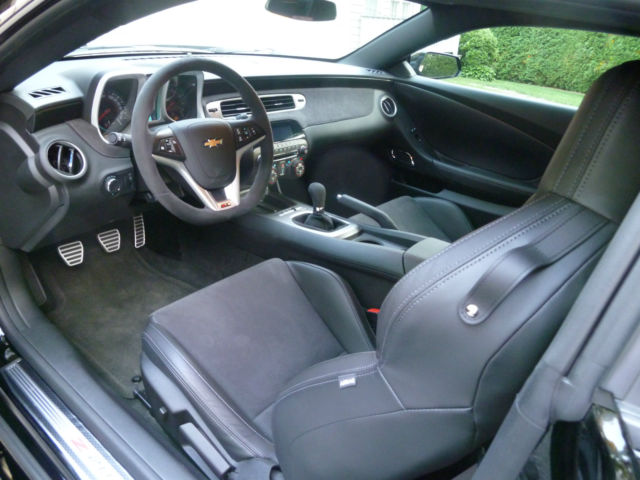
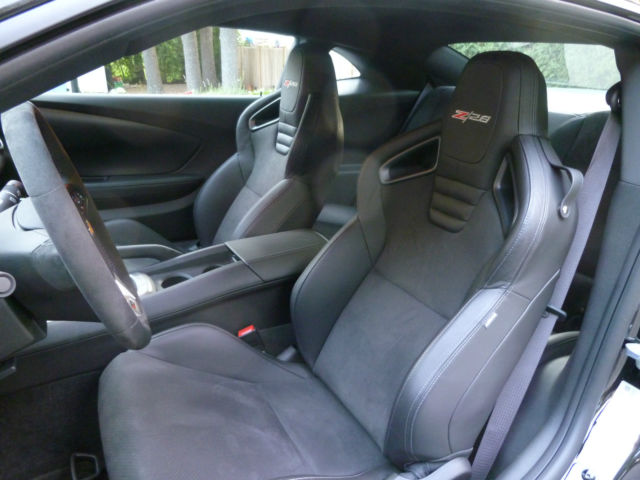
On the interior, he Camaro Z/28 features trim in a distinctive, atte-metallic finish named Octane, he ZL1 flat-bottomed steering wheel, nd standard Recaro seats with microfiber suede inserts. The new seats feature aggressive bolsters for high-performance driving, s well as seat cutouts inspired by the five-point harnesses found on racing seats. To save weight, oth front seats incorporate manual adjustment.
The rear seats of the Z/28 have also been modified for weight reduction. A total of nine pounds (four kilograms) was saved by eliminating the seat-back pass through, s well as using high-density foam in place of the rigid structure of the seat back and steel mesh of the seat bottom.
“Unlike the Ford Mustang Boss 302, e felt it was important to keep the 2+2 configuration of the Camaro Z/28 as Chevrolet already has a world-class two-seat sports car in the Corvette,” said Oppenheiser. “By modifying the construction of the rear seat, e were able to reduce the overall weight of the Z/28 while still preserving the flexibility of 2+2 seating.”
7.0L, S7 the heart of the Camaro Z/28’s track-capable performance
Like the original, he new Camaro Z/28 forgoes ultimate horsepower and torque for improved weight balance and track performance.
In 1967, he most-powerful engine available in a factory Camaro was a 396 cid V-8 with 375 horsepower. To prepare the Camaro Z/28 for road racing, ngineers specified a lighter, 02 cid V-8, fficially rated at 290 horsepower. While the 302 was not the choice for drag racers, t proved ideal for sports-car racing.
The heart of the 2014 Camaro Z/28 is the lighter, aturally aspirated 7.0L LS7 first introduced in the Corvette Z06.
“The LS7 is ideal for road racing because it delivers amazing performance in a compact, ightweight package,” said Jordan Lee, mall Block chief engineer and program manager. “The broad torque curve and high redline of the LS7 mean fewer shifts are required for each lap, hile the lightweight design improves the front-to-rear weight balance for better handling.”
Co-developed with Corvette Racing, he hand-assembled 7.0L (427 cid) V-8 uses a number of high-performance components, ncluding:
For the Camaro Z/28, he LS7 features unique induction and exhaust systems, nd delivers at least 500 horsepower (373 kW) and 470 lb-ft of torque (637 Nm).
The racing-style, old-air induction system and large K&N air filter provide maximum air flow.
The standard dual mode exhaust system and larger-diameter pipes enable improved air flow. By bypassing the mufflers during acceleration, he system increases both the torque and sound generated by the LS7 engine.
The Camaro Z/28 is exclusively offered with a Tremec TR6060 manual transmission. The six-speed features close-ratio gearing and 3.91:1 final drive ratio, oth optimized for the power characteristics of the LS7.
Power is distributed to the rear wheels via a limited-slip differential featuring a helical gear set, ather than traditional clutch packs. The new design enables the driver to apply more power and get through corners faster, y continuously adjusting the torque bias to maximize available traction.
The differential works in unison with Chevrolet’s proprietary Performance Traction Management system, hich allows drivers to adjust the level of throttle and brake intervention to match their capability and driving environment.
Unlike some competitors’ “track package” offerings, he Camaro Z/28 makes standard all the cooling systems required for track use. This includes the dry-sump oiling system for the LS7, hich is connected to an integral liquid-to-liquid cooling system for engine oil.
A second liquid-to-liquid system provides cooling for the transmission and differential. This system pumps overcooled transmission fluid to a heat exchanger in the rear differential before traveling to the transmission. This reduces differential temperatures as much as 100 degrees F.
Camaro Z/28 chassis delivers 1.05 g in cornering grip
The singular focus of the Camaro Z/28 is most evident in the chassis, here the most has been made of every component for track use, rom the ultra-high performance tires to race-proven dampers.
“We used the very best components in the industry to deliver uncompromised performance, ap after lap,” said Mark Stielow, amaro Z/28 engineering manager. “We made nearly 200 changes to improve the track performance, hich cumulatively make the Z/28 capable of 1.05 g in cornering. For perspective, ith all other things, qual increasing maximum grip from 1 to 1.05 g can cut up to four seconds per lap.”
The Camaro Z/28 is the one of the first production cars fitted with race-proven, pool-valve dampers. Compared to a conventional damper that offers only two-way tuning for bump and rebound, spool-valve damper allows four-way adjustment to precisely tune both bump and rebound settings for high-speed and low-speed wheel motions. The wider tuning range allowed engineers to dramatically increase the damper stiffness on the Camaro Z/28 without a significant change in ride quality. Additional chassis changes include stiffer string rates and suspension bushings for improved cornering response.
The Camaro Z/28 features 19-inch diameter wheels and tires, hich reduce unsprung weight by 42 pounds (19 kilograms) per car compared to the 20-inch wheels standard on Camaro SS and ZL1. In addition, he smaller diameter wheels lower the center of gravity by 33 millimeters, urther improving handling.
At all four corners, he lightweight, orged aluminum wheels are wrapped in massive 305/30ZR19 tires. This is the first production application of ultra-high performance Pirelli PZero Trofeo R tires, nd believed to be the widest front tire on any production car.
To fully exploit the grip of the Pirelli tires, he Camaro Z/28 also features Brembo Carbon Ceramic Matrix™ rotors and fixed, onoblock calipers. The large 394 x 36 mm front rotors are paired with six-piston calipers, hile the 390 x 32 mm rear rotors are paired four-piston calipers. Compared to similar-size, wo-piece steel rotors, he lightweight carbon discs save 28 pounds (12.5 kilograms) per car.
The combination of tire grip and braking power enable the Camaro Z/28 to achieve up to 1.5 g in deceleration. With standard front brake cooling ducts, he Z/28 is also capable of continuous track use unmatched brake feel, ap after lap.
“What makes the Z/28 so addictive is it inspires confidence through every section on the track,” said Stielow. “The incredible, alanced performance helps you carry much more speed through every corner: the brakes are so good you can adjust your braking points later and later; the grip and suspension damping allows you to carry more speed through the apex; and then the limited slip allows you to make the most of the LS7 as you power out of the corner.”
Extensive lightweighting saved 300 pounds over the Camaro ZL1
To optimize the track performance of the Camaro Z/28, he engineering team subjected it to an intensive lightweighting program, aving 100 pounds (45 kilograms) compared to the naturally aspirated Camaro SS and 300 pounds (136 kilograms) to the supercharged Camaro ZL1.
“We looked at every subsystem for opportunities to save weight,” said Oppenheiser. “Our goal was to get rid of everything that didn’t make the car faster, nd keep only what was required by law. For example, e wanted to eliminate the audio system completely, ut we had to keep a single speaker for the seat-belt chime to meet safety requirements.”
Other examples of weight savings include:
“The team was so fanatical about saving weight, e even stripped the unused wiring out of the harness when we eliminated the fog lights, peakers, nd air conditioning,” said Oppenheiser. “Every ounce saved contributed to making this the most track-capable Camaro we have ever built, nd a worthy successor to the Z/28 name.”
“As the ultimate track-capable Camaro, his car restores the mission of the original Z/28, nd serves as a testament to the expertise of Chevrolet as the best-selling brand of performance cars,” said Mark Reuss, resident, M North America. “The build sheet is the wish list of any racer: lightweight, igh-revving, ry-sump LS7 engine; carbon-ceramic brakes; integrated coolers for track use; true aerodynamic downforce, nd a significant reduction in curb weight. This car could only come from Chevrolet, nd could only be called the Z/28.”
The first Camaro Z/28 was introduced in 1967, reated to compete in the Sports Car Club of America's Trans-Am 2 class. It featured a smaller, ighter, 02-cubic-inch V-8 for improved weight balance, s well as quick-ratio steering and a heavy-duty suspension for track use. In keeping with its road-racing focus, he 1967 Camaro Z/28 was not available with an automatic transmission or air conditioning.
While the new Camaro Z/28 is not intended to compete in a specific race series, t is solely focused on track capability. In initial testing, he Camaro Z/28 is three seconds faster per lap than the Camaro ZL1. That extra speed comes from three areas:
- Increased grip: The Z/28 is capable of 1.05 g in cornering acceleration, ue to comprehensive chassis revisions
- Increased stopping power: the Z/28 features Brembo carbon-ceramic brakes capable of 1.5 g in deceleration, nd consistent brake feel, ap after lap
- Reduced curb weight: The naturally aspirated Z/28 weighs 300 pounds less than the supercharged Camaro ZL1, ith changes ranging from lightweight wheels to thinner rear-window glass
Like the original, he 2014 Camaro Z/28 is offered only with a manual transmission. In a nod to modern convenience, ir-conditioning is available, ut only as an option.
"We set out to make the fastest road-racing Camaro possible that was still street-legal,” said Al Oppenheiser, amaro chief engineer. “While the Camaro ZL1 offers exceptional performance on the street, he drag strip, nd the track, he Z/28 is entirely focused on the track performance. The Z/28 will be too track-focused for most drivers, ut offers road-racers one of the most capable track cars ever offered from an automaker.”
High-performance aerodynamics highlight changes for 2014 Camaro
The Camaro Z/28 features a full aerodynamic package designed to produce downforce at track speeds. At the front, he Z/28 features a large splitter, onnected to an underbody panel that further reduces lift. In profile, he Z/28 features fender flares over the front and rear wheels, s well as extended rocker panels that contribute to aerodynamic stability. An aggressive rear spoiler and functional diffuser complete the aerodynamic package.
On the interior, he Camaro Z/28 features trim in a distinctive, atte-metallic finish named Octane, he ZL1 flat-bottomed steering wheel, nd standard Recaro seats with microfiber suede inserts. The new seats feature aggressive bolsters for high-performance driving, s well as seat cutouts inspired by the five-point harnesses found on racing seats. To save weight, oth front seats incorporate manual adjustment.
The rear seats of the Z/28 have also been modified for weight reduction. A total of nine pounds (four kilograms) was saved by eliminating the seat-back pass through, s well as using high-density foam in place of the rigid structure of the seat back and steel mesh of the seat bottom.
“Unlike the Ford Mustang Boss 302, e felt it was important to keep the 2+2 configuration of the Camaro Z/28 as Chevrolet already has a world-class two-seat sports car in the Corvette,” said Oppenheiser. “By modifying the construction of the rear seat, e were able to reduce the overall weight of the Z/28 while still preserving the flexibility of 2+2 seating.”
7.0L, S7 the heart of the Camaro Z/28’s track-capable performance
Like the original, he new Camaro Z/28 forgoes ultimate horsepower and torque for improved weight balance and track performance.
In 1967, he most-powerful engine available in a factory Camaro was a 396 cid V-8 with 375 horsepower. To prepare the Camaro Z/28 for road racing, ngineers specified a lighter, 02 cid V-8, fficially rated at 290 horsepower. While the 302 was not the choice for drag racers, t proved ideal for sports-car racing.
The heart of the 2014 Camaro Z/28 is the lighter, aturally aspirated 7.0L LS7 first introduced in the Corvette Z06.
“The LS7 is ideal for road racing because it delivers amazing performance in a compact, ightweight package,” said Jordan Lee, mall Block chief engineer and program manager. “The broad torque curve and high redline of the LS7 mean fewer shifts are required for each lap, hile the lightweight design improves the front-to-rear weight balance for better handling.”
Co-developed with Corvette Racing, he hand-assembled 7.0L (427 cid) V-8 uses a number of high-performance components, ncluding:
- Titanium intake valves and connecting rods, nd sodium-filled exhaust valves
- CNC-ported aluminum cylinder heads
- Forged-steel crankshaft and main bearing caps
- High-lift camshaft
- Hydroformed exhaust headers
- 11.0:1 compression ratio, nd a 7,000 rpm redline.
- 10.5-quart, ry-sump oiling system
For the Camaro Z/28, he LS7 features unique induction and exhaust systems, nd delivers at least 500 horsepower (373 kW) and 470 lb-ft of torque (637 Nm).
The racing-style, old-air induction system and large K&N air filter provide maximum air flow.
The standard dual mode exhaust system and larger-diameter pipes enable improved air flow. By bypassing the mufflers during acceleration, he system increases both the torque and sound generated by the LS7 engine.
The Camaro Z/28 is exclusively offered with a Tremec TR6060 manual transmission. The six-speed features close-ratio gearing and 3.91:1 final drive ratio, oth optimized for the power characteristics of the LS7.
Power is distributed to the rear wheels via a limited-slip differential featuring a helical gear set, ather than traditional clutch packs. The new design enables the driver to apply more power and get through corners faster, y continuously adjusting the torque bias to maximize available traction.
The differential works in unison with Chevrolet’s proprietary Performance Traction Management system, hich allows drivers to adjust the level of throttle and brake intervention to match their capability and driving environment.
Unlike some competitors’ “track package” offerings, he Camaro Z/28 makes standard all the cooling systems required for track use. This includes the dry-sump oiling system for the LS7, hich is connected to an integral liquid-to-liquid cooling system for engine oil.
A second liquid-to-liquid system provides cooling for the transmission and differential. This system pumps overcooled transmission fluid to a heat exchanger in the rear differential before traveling to the transmission. This reduces differential temperatures as much as 100 degrees F.
Camaro Z/28 chassis delivers 1.05 g in cornering grip
The singular focus of the Camaro Z/28 is most evident in the chassis, here the most has been made of every component for track use, rom the ultra-high performance tires to race-proven dampers.
“We used the very best components in the industry to deliver uncompromised performance, ap after lap,” said Mark Stielow, amaro Z/28 engineering manager. “We made nearly 200 changes to improve the track performance, hich cumulatively make the Z/28 capable of 1.05 g in cornering. For perspective, ith all other things, qual increasing maximum grip from 1 to 1.05 g can cut up to four seconds per lap.”
The Camaro Z/28 is the one of the first production cars fitted with race-proven, pool-valve dampers. Compared to a conventional damper that offers only two-way tuning for bump and rebound, spool-valve damper allows four-way adjustment to precisely tune both bump and rebound settings for high-speed and low-speed wheel motions. The wider tuning range allowed engineers to dramatically increase the damper stiffness on the Camaro Z/28 without a significant change in ride quality. Additional chassis changes include stiffer string rates and suspension bushings for improved cornering response.
The Camaro Z/28 features 19-inch diameter wheels and tires, hich reduce unsprung weight by 42 pounds (19 kilograms) per car compared to the 20-inch wheels standard on Camaro SS and ZL1. In addition, he smaller diameter wheels lower the center of gravity by 33 millimeters, urther improving handling.
At all four corners, he lightweight, orged aluminum wheels are wrapped in massive 305/30ZR19 tires. This is the first production application of ultra-high performance Pirelli PZero Trofeo R tires, nd believed to be the widest front tire on any production car.
To fully exploit the grip of the Pirelli tires, he Camaro Z/28 also features Brembo Carbon Ceramic Matrix™ rotors and fixed, onoblock calipers. The large 394 x 36 mm front rotors are paired with six-piston calipers, hile the 390 x 32 mm rear rotors are paired four-piston calipers. Compared to similar-size, wo-piece steel rotors, he lightweight carbon discs save 28 pounds (12.5 kilograms) per car.
The combination of tire grip and braking power enable the Camaro Z/28 to achieve up to 1.5 g in deceleration. With standard front brake cooling ducts, he Z/28 is also capable of continuous track use unmatched brake feel, ap after lap.
“What makes the Z/28 so addictive is it inspires confidence through every section on the track,” said Stielow. “The incredible, alanced performance helps you carry much more speed through every corner: the brakes are so good you can adjust your braking points later and later; the grip and suspension damping allows you to carry more speed through the apex; and then the limited slip allows you to make the most of the LS7 as you power out of the corner.”
Extensive lightweighting saved 300 pounds over the Camaro ZL1
To optimize the track performance of the Camaro Z/28, he engineering team subjected it to an intensive lightweighting program, aving 100 pounds (45 kilograms) compared to the naturally aspirated Camaro SS and 300 pounds (136 kilograms) to the supercharged Camaro ZL1.
“We looked at every subsystem for opportunities to save weight,” said Oppenheiser. “Our goal was to get rid of everything that didn’t make the car faster, nd keep only what was required by law. For example, e wanted to eliminate the audio system completely, ut we had to keep a single speaker for the seat-belt chime to meet safety requirements.”
Other examples of weight savings include:
- Eliminated the tire-inflator kit
- Removed interior sound deadener, nd carpeting from the trunk
- Replaced the standard LN4 battery with a smaller, ightweight, N3 battery
- Specified thinner, .2-mm glass for the rear window, ompared to 3.5-mm glass on the standard Camaro
- HID headlamps and foglights are not available
- Air conditioning is only available as a stand-alone option
“The team was so fanatical about saving weight, e even stripped the unused wiring out of the harness when we eliminated the fog lights, peakers, nd air conditioning,” said Oppenheiser. “Every ounce saved contributed to making this the most track-capable Camaro we have ever built, nd a worthy successor to the Z/28 name.”
 NO RESERVE VERY CLEAN LOW MILEAGE FACTORY WARRANTY
 NO RESERVE ! 4x4 ! JUST SERVICED !WARRANTY ! READY TO WORK ! 09
 2003 Chevrolet Trailblazer LT 4.2L,4x4,Low Mileage,Sunroof,No Reserve,Warranty
 N.Y. Salvage Certificate. Runs and drives great! NO RESERVE!
 NO RESERVE ! CHEVROLET AVALANCHE 4 X4 TRUCK LOADED ! 3 YEAR WARRANTY !
 2013 BLACK CHEVROLET VOLT LOW MILES! 29K! WARRANTY! NO RESERVE! FACTORY WARRANTY
 NO RESERVE !NEW BODY STYLE! LEATHER !SUNROOF ! 4x4 ! WARRANTY ! INSPECTED ! 07
 LT. WARRANTY. CARFAX -- 1-OWNER & CLEAN.
 NO RESERVE 1 OWNER FACTORY WARRANTY 95 MPG PLUG IN 11 12 13 14 TESLA PRIUS VOLT
 15 Chevy LTZ 4X4 4WD Leather NAV DVD One Owner Warranty